For years, automation has been defined by backend systems.
Workflows lived on servers.
Logic ran in the cloud.
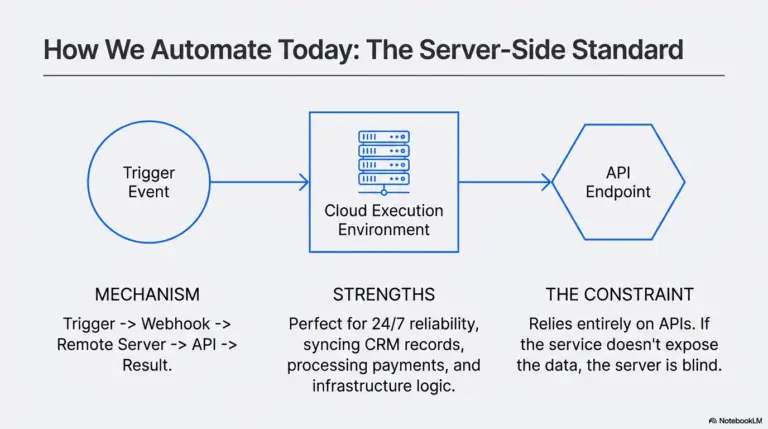
APIs were the primary integration layer.
This model worked well for connecting SaaS applications and orchestrating backend infrastructure. But it ignored one critical environment:
The browser.
Today, most professional activity happens inside web applications. Research, marketing, analytics, product management, operations, sales — all rely heavily on browser-based tools.
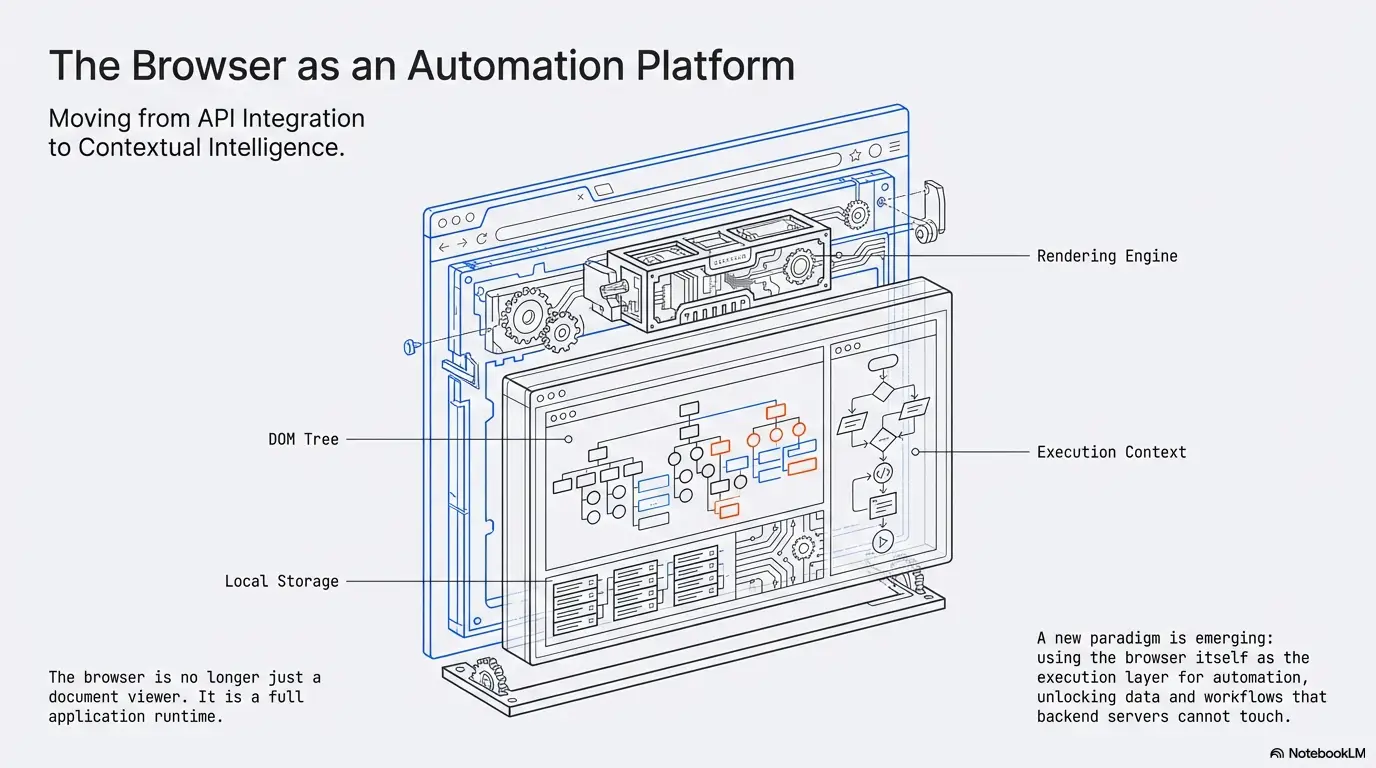
The browser is no longer a simple document viewer. It is an execution environment.
And that shift creates a new paradigm: the browser as an automation platform.
From API-Centric Automation to Context-Centric Automation
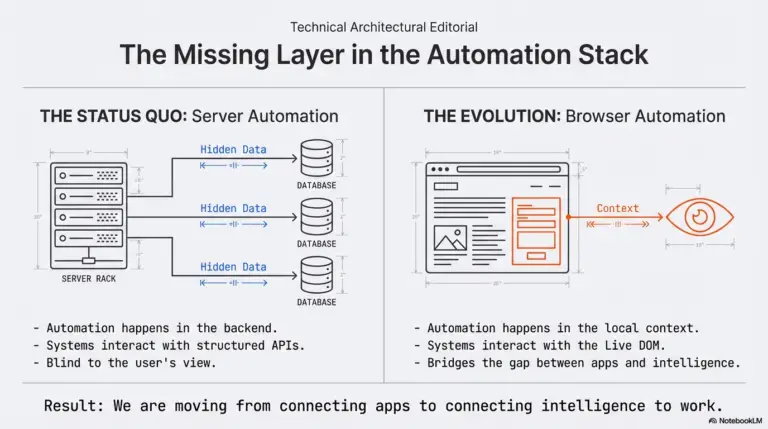
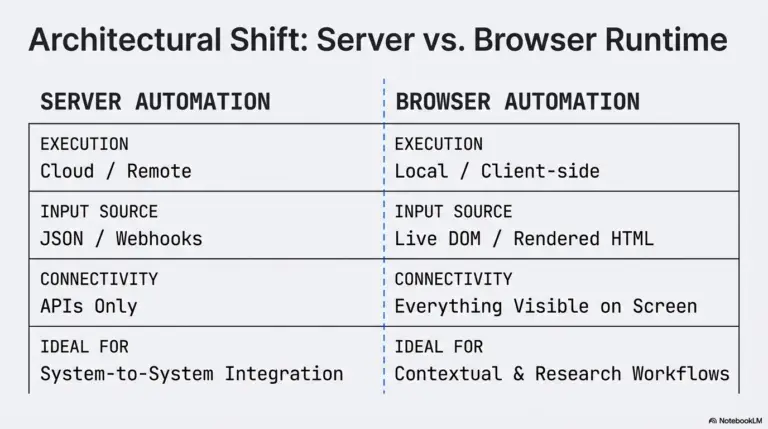
Traditional automation platforms operate API-first.
They rely on structured endpoints.
They exchange JSON payloads.
They react to webhooks.
This model is powerful but limited. It assumes that everything meaningful is accessible through an API.
In reality:
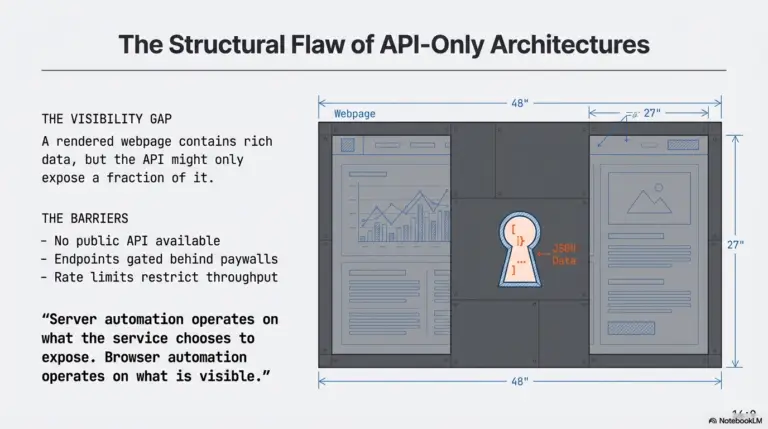
Many websites do not provide public APIs.
Some APIs restrict access to specific plans.
Rendered content often contains more information than official endpoints expose.
User behavior and on-screen context are invisible to backend systems.
Browser-native automation changes the reference point.
Instead of asking, “What does the API expose?”
It asks, “What is visible and accessible in the browser right now?”
Agentic Workflow Studio contributes directly to this shift by enabling workflows to run inside the browser, where the actual interaction happens.
It does not depend exclusively on backend integrations. It operates at the level where users work.
The Browser Is Already a Runtime
Modern browsers support:
JavaScript execution
WebAssembly
WebGPU
Advanced DOM manipulation
Client-side storage
Real-time rendering
They are effectively application platforms.
Yet automation largely ignored this runtime and stayed in the cloud.
Agentic Workflow Studio leverages the browser as a first-class execution environment. Workflows run locally, interact with rendered HTML, and manipulate the DOM in real time.
This is not scraping in isolation.
It is automation integrated with the live browsing experience.
Context Is the Missing Layer
Backend systems understand structured data.
They do not understand context.
Context includes:
The text currently selected by the user.
The exact version of the page after dynamic rendering.
The visible content after filters are applied.
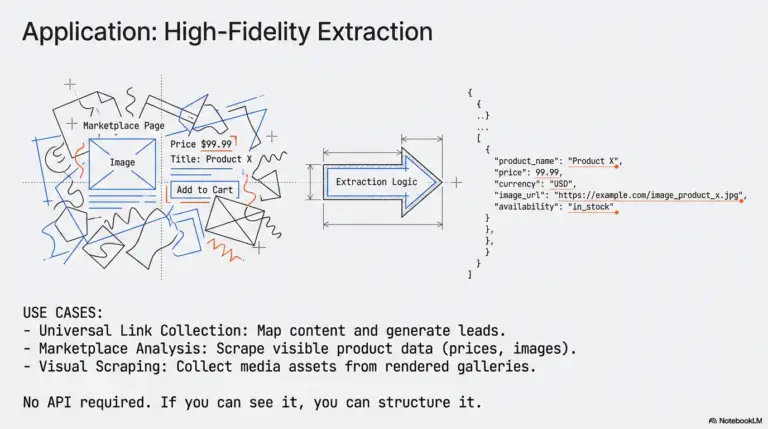
The images, links, and embedded elements on screen.
The user’s current workflow state.
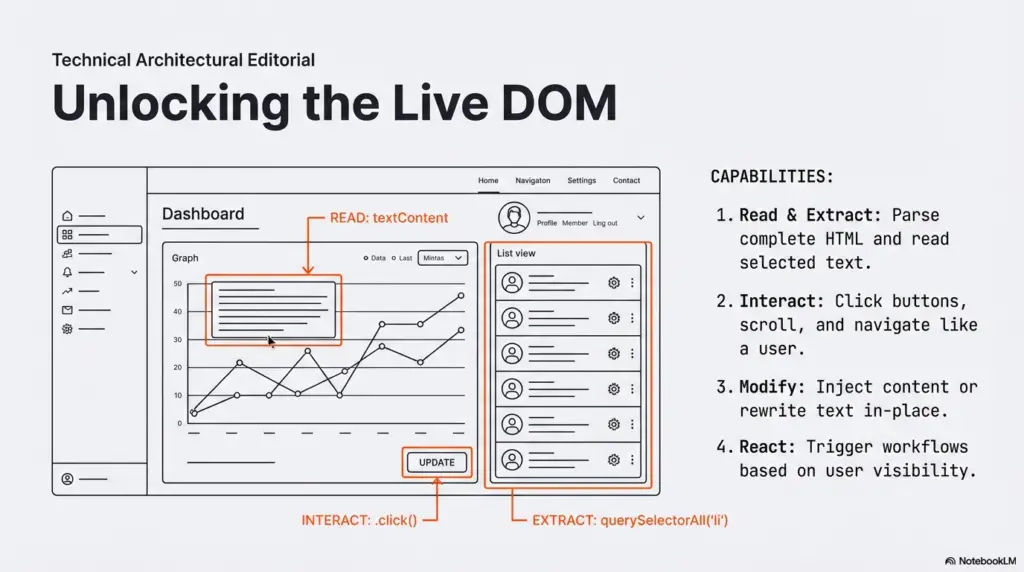
Agentic Workflow Studio allows workflows to access:
Selected text.
Full page text.
Complete HTML.
All links.
All images.
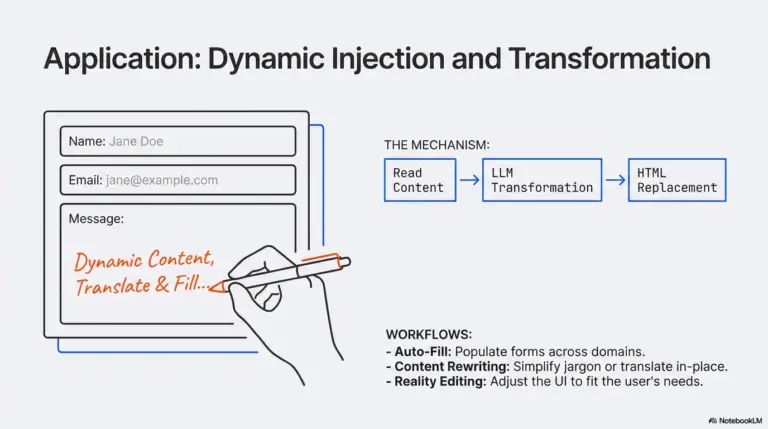
And the ability to inject or modify content directly.
This creates context-aware automation.
Instead of building workflows that react only to system events, you can build workflows that react to what you are actively viewing.
AI Changes the Equation
AI amplifies this paradigm shift.
When AI operates only through backend APIs, it processes isolated input. The user must manually transfer information into the model.
When AI operates inside the browser, it can:
Analyze live page content.
Interpret rendered HTML.
Classify visible data.
Transform text in place.
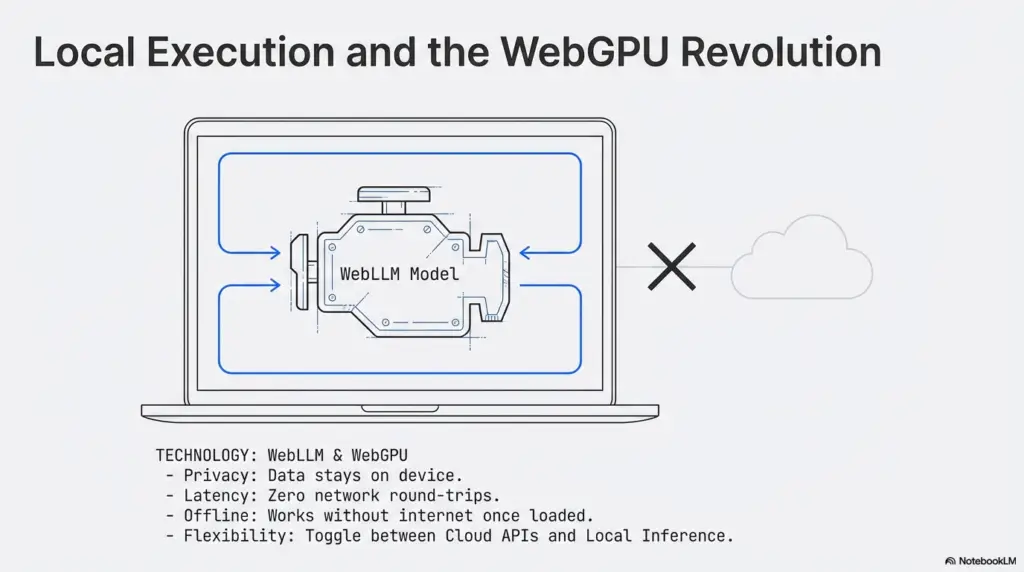
Agentic Workflow Studio integrates AI directly into browser workflows. It supports both external LLM APIs and local execution using WebLLM.
Running models locally in the browser introduces:
Greater privacy control.
Lower latency.
Offline potential.
Flexible execution strategies.
This means intelligence can operate directly where work happens — not in a disconnected chat window.
The browser becomes a contextual AI runtime.
From Automation to Agentic Workflows
Traditional automation executes predefined steps.
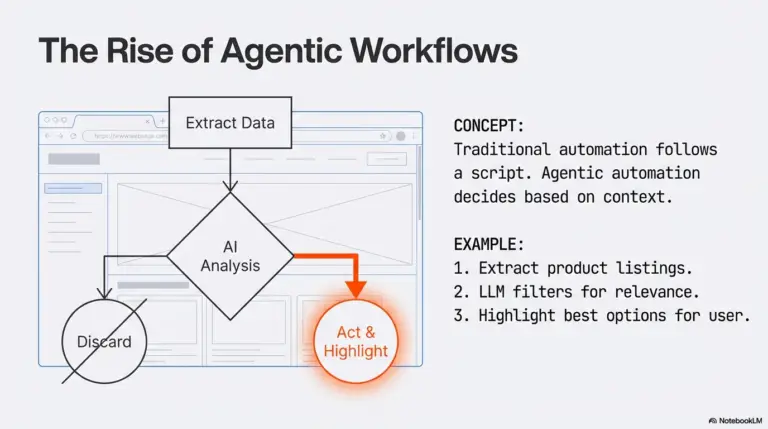
Agentic workflows introduce decision-making layers. They can:
Extract page data.
Send it to an LLM.
Interpret the result.
Branch logic based on AI output.
Modify the page or trigger further actions.
Agentic Workflow Studio enables this inside the browser.
For example:
You extract product listings from a page.
An LLM categorizes them.
The workflow highlights specific items.
Relevant data is sent to an external API.
The automation is not just procedural. It is context-aware and adaptive.
That is the core of the “agentic” paradigm.
Hybrid Automation Is the Future
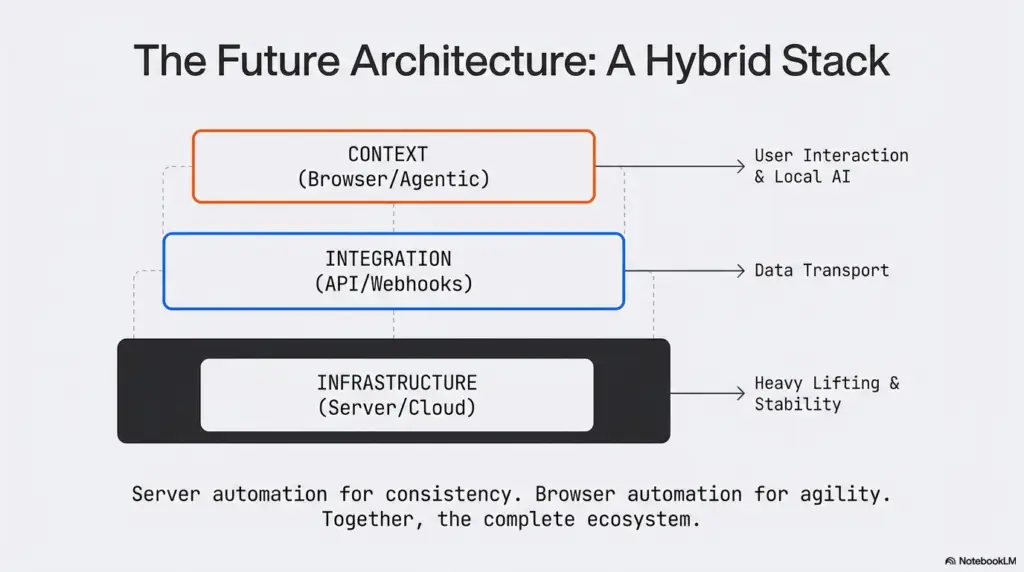
This new paradigm does not eliminate server automation. It complements it.
Server-based platforms remain essential for:
24/7 backend execution.
Enterprise system integrations.
Infrastructure-level orchestration.
Browser-native automation fills a different gap:
User-side workflows.
Context-driven interactions.
Live content manipulation.
AI-assisted browsing.
Agentic Workflow Studio contributes to this hybrid model by anchoring automation in the browser while still supporting HTTP integrations with external APIs.
You can combine:
Live DOM extraction.
AI analysis.
External API calls.
Page transformation.
All within a single workflow.
Why This Shift Matters
Work increasingly happens in browser-based tools.
If automation ignores the browser, it ignores the primary workspace of modern professionals.
By turning the browser into an automation platform, Agentic Workflow Studio:
Brings execution closer to the user.
Reduces friction from manual tasks.
Enables automation where no API exists.
Integrates AI directly into daily workflows.
It reframes automation from system orchestration to contextual intelligence.
A New Layer in the Automation Stack
The automation stack is expanding.
Infrastructure layer: cloud servers and backend logic.
Integration layer: APIs and webhooks.
Context layer: the browser.
For years, the context layer was missing from automation architecture.
Now it is accessible.
Agentic Workflow Studio contributes to this evolution by enabling workflows that operate exactly where digital work happens — inside the browser — combining DOM access, workflow logic, AI models, and API connectivity in a single execution environment.
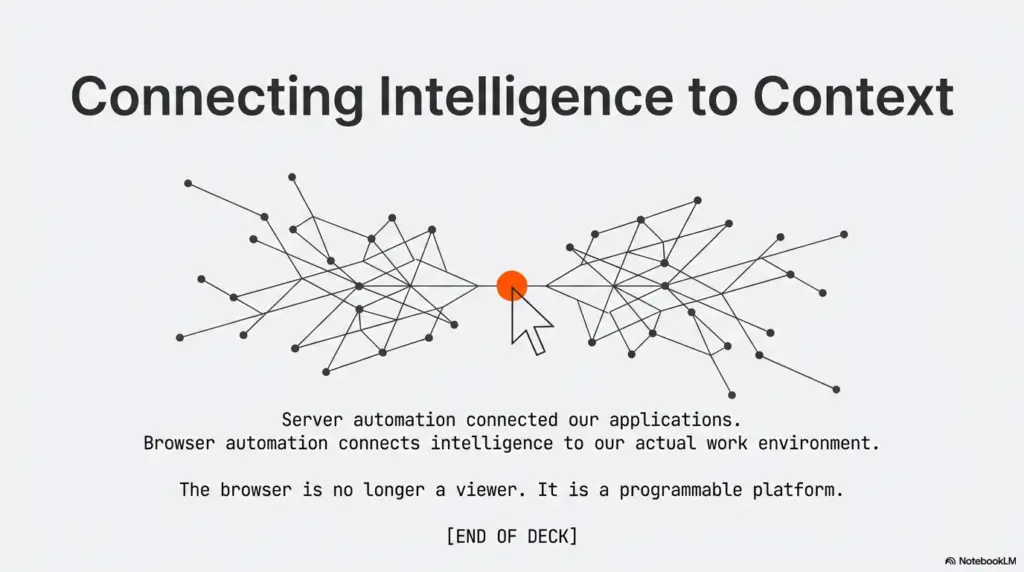
The browser is no longer just a gateway to applications.
It is becoming a programmable automation platform in its own right.
Try Agentic Workflow Free
Experience the browser-native automation paradigm firsthand — build AI workflows that run on any live web page.
Get Started Free →
Dannick K.
Creator, Agentic Workflow
Creator of Agentic Workflow — a browser-native AI automation extension for Chrome and Firefox. Building tools that bring the power of automation directly into the browser, without servers, APIs, or engineering teams.